Luxury home builders Melbourne: what the word doesn’t tell you about how a firm works

Searching for luxury home builders Melbourne returns dozens of firms using similar language, and the word luxury alone does not explain how a builder designs, manages cost or checks its work. It describes an outcome. What a buyer needs to understand before committing is the operating model behind it: the investment range the firm works within and what that range includes, whether its design starts from your site and your household or from an existing plan, and how the cost of the home becomes known through the stages of the process. Latitude 37, a custom design-and-build firm founded in 2006 by Doug MacLeod and building across six Melbourne regions, from the Inner North and East through to the Mornington Peninsula, sets out those three things for any firm, and answers them for itself.

Luxury home builders Melbourne: what the word doesn’t tell you about how a firm works

Key Takeaways

  • The word luxury describes a level of finish or an ambition. It does not describe how a firm designs, manages costs, or checks its work, and that is what a buyer needs to understand first.
  • A clearly stated investment range helps you judge whether a builder is likely to suit your project, once you know what it includes and how your site and brief could affect it.
  • The clearest sign of a custom process is not the finished home. It is what the design started from.
  • Cost becomes known in stages. Early conversations give guidance, the first concept carries an indicative build cost, and detailed pricing follows documentation. No first conversation settles it.
  • Latitude 37 specialises in custom design-and-build rather than volume or project-home construction, states its investment range, and presents an indicative build cost alongside the first concept.

What a search for luxury home builders in Melbourne tells you, and what it doesn't

Type luxury home builders Melbourne into a search bar and read the first ten results. The language is remarkably similar from one firm to the next. Luxury. Premium. Bespoke. Award-winning. None of it tells you how a firm designs a home, manages the cost of it, or checks the work while it is being built.

That is not a criticism of the firms. It is a limitation of the words. The vocabulary of this category describes an outcome, and what a buyer needs to understand before committing is a process.

Doug MacLeod, Founder, Director of Latitude 37, who holds a Bachelor of Engineering with Honours, has spent 20 years on the other side of that search. The view at Latitude 37 is that debating the words is a poor use of a buyer’s time. What helps is understanding three things about how a firm actually operates, and then weighing them alongside the homes it has completed and what recent clients say.

Why the words on builder websites carry so little information

The word luxury alone does not explain how a builder designs, manages cost or checks its work. Nor does premium, or bespoke, or any of the other terms that recur across the category. They describe a level of finish. They do not describe a method.

Two firms can use identical language and run very differently. One may begin every project from a site analysis and a household brief, the other from a plan in its range. One may present costs at concept stage, the other at contract. Both can build a fine home, and the words on their websites will not tell you which approach you are buying.

So the more useful question is not which words a firm uses. It is how the firm operates, and whether its practices support what it says. Three parts of the operating model tell you most. Where the firm works best. What its design starts from. And how the cost of your home becomes known.

Where the firm works best: the investment range and what it includes

Start with a number, and then with what sits behind it.

A clearly stated investment range helps you assess whether a builder is likely to suit your project. It does not, on its own, establish design quality, construction capability or financial strength. What it does is give you something concrete to ask about.

Ask what the range includes and excludes. Site works, demolition, planning and landscaping sit inside some firms’ figures and outside others’, and two ranges that look alike can describe quite different scopes. Ask how your site and your brief could move a project within the range. And if a firm answers “it depends”, treat that as the start of the conversation rather than the end of it. In custom building it often does depend. The useful follow-up is what it depends on, and how the firm will resolve that uncertainty with you.

Latitude 37 states its range on its website: custom homes from $1.5 million to $5 million and above. The Project Investment Guide sets out what an estimate at that level typically includes and what sits outside it, and it is a starting point rather than a project-specific figure. When you are comparing luxury home builders in Melbourne, that is the kind of detail to ask each one for.

Latitude 37 specialises in custom design-and-build rather than volume or project-home construction, and says so plainly, because its process is built for a single custom project with a committed team. Alongside commissioned custom homes, Latitude 37 also creates a limited collection of its own residences for purchase.

What the design starts from: your site and household, or an existing plan

This is the part of the operating model most people approach from the wrong end. They look at the finished home to judge whether it is custom. The finished home cannot tell you that. Two homes of similar finish can have come from quite different starting points.

A custom process starts from your site and your household: the slope and orientation of the block, the overlays that apply, the way your family actually moves through a day. A plan-based process starts from a design that existed before you did, and adapts it. Both are legitimate. They ask different things of you, produce different homes, and are priced on different assumptions, so it helps to know which one you are being offered.

Ask to see the first thing the firm produces after you engage it. If it is a concept drawn from your site analysis and your brief, that is one kind of process. If it is a floor plan from a range with your name on it, that is another. Our page on what a custom home builder starts from explains the Latitude 37 approach, and the most useful thing we can say about it here is that you can check it against what arrives after the first design brief meeting.

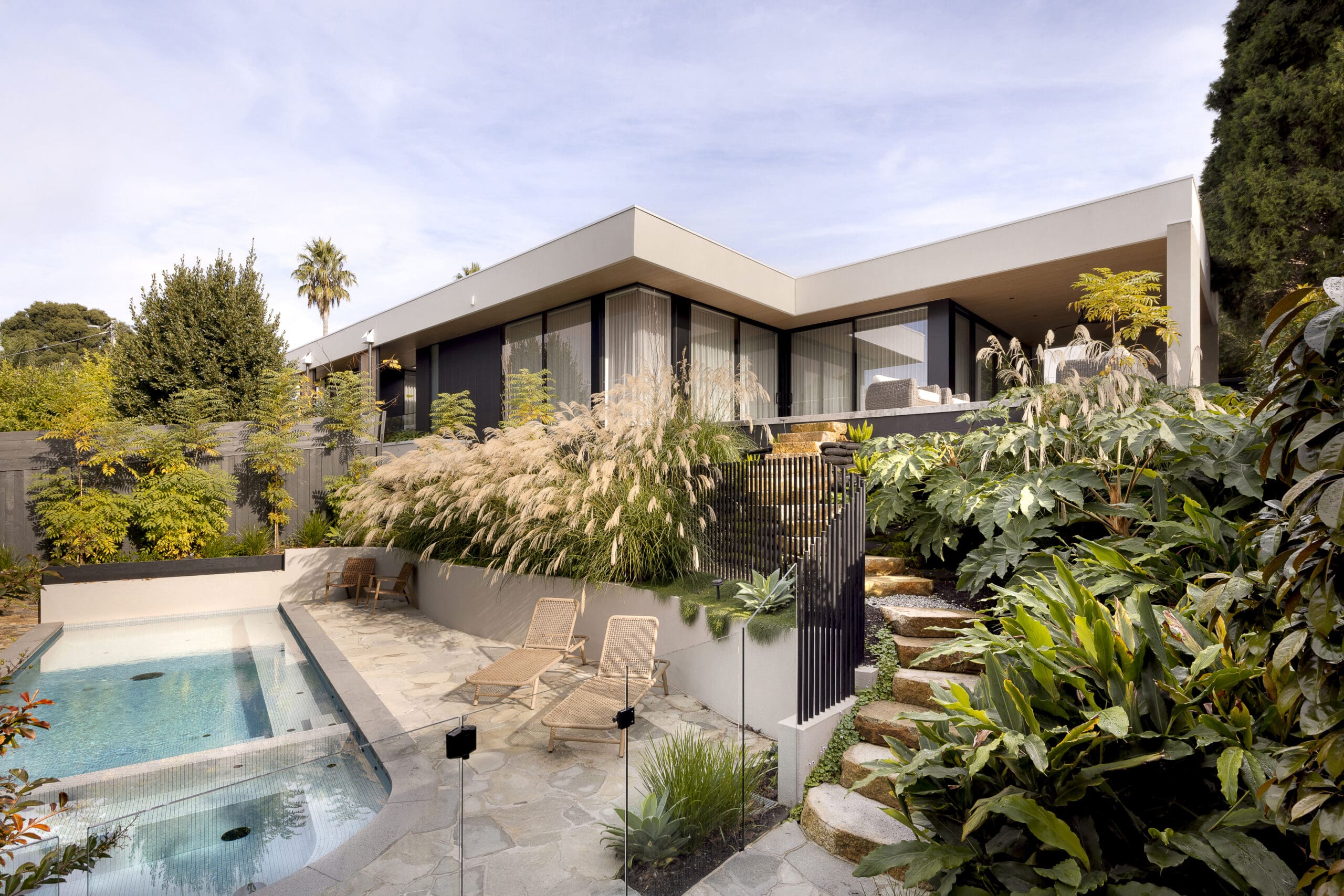
Starting from the site also changes what the site is allowed to do to the design. On a sloping block in Brighton East or a coastal site in Sorrento, a plan adapted to the land and a design that grew out of it can look similar in a render and behave very differently to live in. We have written separately about what actually drives the cost of a custom home, and the site is the first of the four things it names.

How the cost becomes known: what to expect at each stage

The third part of the operating model is the one buyers most want settled early, and the one that cannot honestly be settled early.

Before you engage a builder, ask for a plain discussion about likely budget fit, the key assumptions about your site, and what further work is needed to test feasibility properly. That conversation can give you honest guidance. Any figure offered at that point can only be a broad guide, so it helps to ask what it is based on.

At Latitude 37 an indicative build cost is presented alongside the first concept, during Concept Design, following the initial design engagement. A line-by-line Custom Home Proposal follows at the next stage, once the design has developed. Working drawings, engineering and selections are then coordinated through Project Documentation, and detailed pricing is reconciled through a Bill of Quantities at contract. Each stage narrows the range, and each is a point at which the brief and the budget are tested against each other while the design is still easy to change.

Ask any firm you are considering to describe its equivalent. When will you first see a figure, what will it be based on, and at what point does it become the price you sign? The answers tell you how the firm manages cost, which is the thing the word luxury leaves out.

What to do with the answers when you are comparing a shortlist

Put the three questions to every firm on your list and write the answers down. What range does it work within and what does that include? What did the first drawing come from? When does the cost become known, and on what basis?

These questions help you understand how a builder operates beyond its portfolio and marketing language. Consider the answers alongside completed homes, recent client experiences and the way quality is checked throughout construction. A firm whose practices support what it says will be consistent across all of those. Where the answers are vague or the practices do not match the language, ask more questions before you engage.

The operating model is one half of the decision. The other half is the relationship: how the business is governed, who holds your brief and whether that person changes, and what happens in the first year after you move in. We have written separately about the four criteria that predict how a long build goes, and the two pieces are meant to be read together.

None of this requires you to decide what luxury means. Different firms will use the word to mean different things, and that is fine. What matters is whether the practices behind the word suit your site, your brief and the way you want the next three years to go.

Latitude 37 is a custom design-and-build firm operating across six Melbourne regions, from the Inner North and East through to the Mornington Peninsula, and a member of the Housing Industry Association and the Master Builders Association. Many of the people we build for are clients who came to us through referral. Put the three questions to us first. That is what they are for.

Start A Conversation

If you are comparing firms, put the three questions to us. The most useful next step is an unhurried conversation about your site, your brief and your budget, with no obligation. We will tell you honestly where the fit is strong and where it is not.

Start a conversation with Latitude 37

FAQs

How do I check whether a luxury home builder really operates at that level?

Latitude 37 suggests looking past the words to three parts of the firm’s operating model. What investment range does it work within, and what does that include? Does its first drawing come from your site and household, or from an existing plan? And when does the cost of the home become known, and on what basis? Consider the answers alongside the homes the firm has completed, what recent clients say, and how quality is checked during construction.

What does a stated investment range tell you about a builder?

Latitude 37’s view is that a clearly stated range shows a firm has thought about where its process works best, and it gives you something concrete to ask about. It does not on its own establish design quality, construction capability or financial strength. Ask what the range includes, how your site and brief could affect it, and when the builder will test the design against your budget. Latitude 37 states its range on its website and explains what an estimate at that level typically covers.

What should a luxury home builder in Melbourne be able to tell me before I commit?

Before you engage a builder, Latitude 37 suggests asking for an honest discussion about likely budget fit, the key site assumptions, and what further work is needed to test feasibility. At Latitude 37, an indicative build cost is presented alongside the first concept, following the initial design engagement, with a detailed Custom Home Proposal at the next stage and pricing reconciled at contract. The first conversation gives guidance. The stages that follow give the numbers.

Can a home builder call itself luxury without meeting a defined standard?

Latitude 37’s plain answer is that no single standard defines the word. Whatever terminology a builder uses, its claims must be accurate and reasonably supported, but the word luxury alone does not explain how a firm designs, manages cost or checks its work. That is why the term appears in almost every result for luxury home builders Melbourne. Buyers are better served by asking how a firm operates than by comparing the words it chooses.

How can I tell whether a home was designed from the site or adapted from a plan?

Latitude 37 suggests asking to see the first thing the firm produced for a recent client. A concept drawn from a site analysis and a household brief looks different from a floor plan selected from a range and adjusted, even when the finished homes look similar. At Latitude 37 the first concept follows the design brief meeting and a site analysis, and it arrives with an indicative build cost so the brief and the budget can be tested together from the start.

begin your journey today

This field is for validation purposes and should be left unchanged.