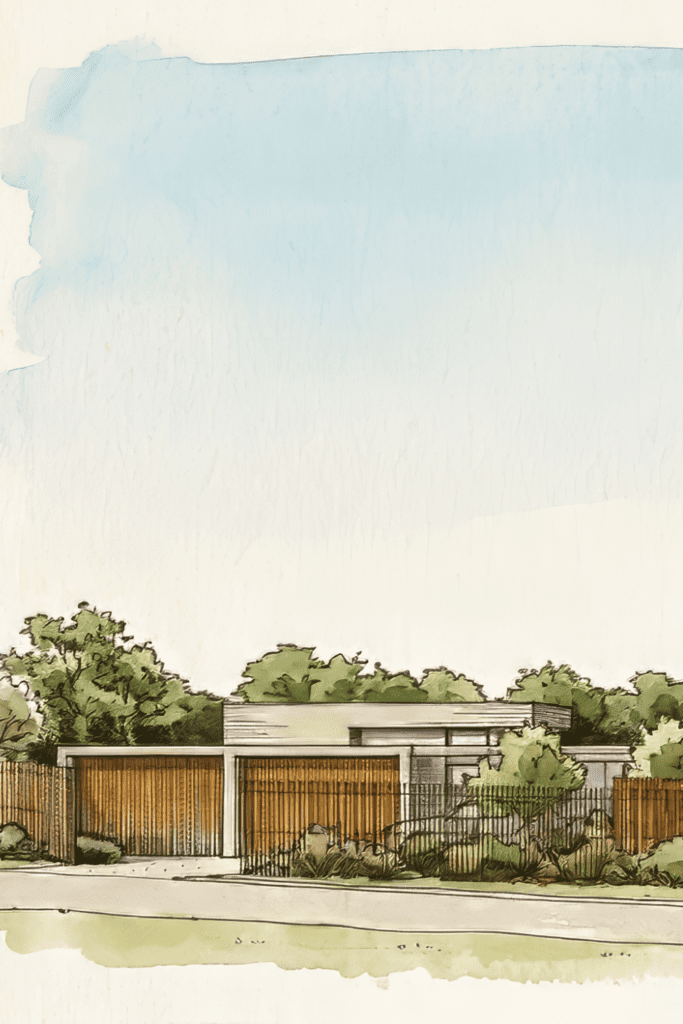
What could be possible for your home?

What is possible for your home becomes clearer when you explore ideas broadly enough to see real opportunities, but not so loosely that the process loses shape. The early goal is not to find the final answer straight away. It is to test directions, understand what is shaping them, and discover which possibilities are meaningful, feasible and worth pursuing.

What could be possible for your home?

Answer

What is possible for your home becomes clearer when you explore ideas broadly enough to see real opportunities, but not so loosely that the process loses shape. The early goal is not to find the final answer straight away. It is to test directions, understand what is shaping them, and discover which possibilities are meaningful, feasible and worth pursuing.

Key Takeaways

  • Early design is about exploring possibility before narrowing too quickly into one answer.
  • You do not need a fixed vision to begin. Possibility becomes clearer as ideas are tested against real conditions.
  • Inspiration is most useful when it helps you think in directions and design moves, not just visual references.
  • Budget, site conditions and practical constraints often improve design thinking rather than diminish it.
  • The strongest outcomes usually come from exploring broadly at first, then refining with more clarity, context, and judgment.

Concern

It is normal to feel excited and unsure at the same time

When people begin thinking seriously about creating their new home, one of the first questions is often not “What should we build?” but something more open-ended and emotional: what could this become?

Sometimes that question comes with excitement. Sometimes it comes with uncertainty. Often it comes with both at once. A family might sense that their home has more potential, but not know how far that potential extends. They may wonder whether they should be thinking bigger, editing more carefully, preserving what they have, or reimagining it more boldly.

They may have fragments of inspiration, strong feelings about how they want life to feel, or a few examples they keep returning to, but still struggle to picture what is genuinely possible for their own home.

This is a very normal stage in the journey.

In Explore and Plan, most people are not looking for a finished design. They are looking for grounded imagination fuel. They want enough inspiration to see new possibilities, enough realism to trust the process, and enough structure to avoid getting lost in too many ideas.

That is where early design thinking matters most.

Journey

Exploring possibility is a stage, not a test

At this stage, possibility is not about choosing a final answer. It is about opening up the field just enough to discover what kinds of answers might exist. It is about understanding how a home could shift in layout, feeling, function or character before locking into one path too soon.

Good design rarely appears fully formed at the beginning. More often, it becomes clearer as ideas are tested against lived needs, site conditions, priorities and constraints.

A strong design process does not just generate options. It helps people imagine more intelligently.

Over 20 years of designing and building homes, Latitude 37 has seen that early design confidence rarely comes from the first exciting idea. It comes from testing possibilities in the right way, until a direction starts to feel both energising and grounded.

Priorities

The three things that shape what is genuinely possible

When people are exploring what their home could become, three things usually matter most early:

  • Leaving room to explore before narrowing too soon
  • Grounding inspiration in the realities of this home and site
  • Using constraints as inputs, not just limitations

This order matters.

Possibility is most useful when it starts open enough to reveal opportunity, then becomes more specific as lived needs, site realities and priorities start giving it shape.

1. Explore before you define

One of the biggest mistakes people make early on is assuming they need to settle on the right direction as quickly as possible.

That instinct is understandable. Choosing a clear idea can feel productive. It creates momentum. It can also reduce the discomfort of uncertainty. But when a project narrows too early, it often limits the quality of what can emerge. A home may end up reflecting the first workable concept rather than the strongest one.

Exploring possibility means giving ideas room to breathe before they harden into decisions.

That might involve considering more than one way to organise the plan. It might mean testing whether the real opportunity lies in opening up the centre of the home, creating a stronger connection to outdoors, improving zoning, or rethinking how private and shared spaces relate. It may mean comparing what happens if you extend, reconfigure, subtract, preserve or simply use the existing footprint better.

The point is not to create endless options for their own sake. The goal is to explore the right variables early enough to learn from them.

A useful question is not only, “What do we like?” but also:

  • What are we trying to make possible in daily life?
  • Where could this home work harder for us?
  • What feels constrained at the moment?
  • What spatial qualities are we craving more of?
  • Which moves might create the biggest difference?

Those questions help turn possibility from fantasy into a design conversation.

2. Inspiration is most useful when it is grounded

People often think of inspiration as images: saved projects, rooms they admire, combinations of materials, details that create a mood. These references can be valuable, but on their own they do not always reveal what is possible for a specific home.

A beautiful room elsewhere may rely on site conditions you do not have. A layout that looks effortless in one project may not make sense in another. Even a feeling you are drawn to, such as calm, generosity, warmth or openness, can be created in many different ways.

That is why possibility content should not behave like a project gallery. Its role is not to flood people with polished outcomes. It is to help them think in scenarios, combinations and directional moves.

For example, a home might become:

  • more connected to landscape without becoming fully open-plan
  • more generous in feel without adding a large amount of floor area
  • calmer through better zoning and storage, not just new finishes
  • brighter through orientation, openings and circulation, not simply more glass
  • more private and more sociable at the same time, depending on how thresholds are designed

These kinds of possibilities are more useful than visual references alone because they start to explain what design can do, not just what it can look like.

3. What shapes what is possible

Possibility can feel expansive at the beginning, but it is never abstract for long. Good design always meets real conditions.

What is possible for a home is shaped by many things: the site, the existing structure, orientation, access, privacy, views, budget, planning controls, family life, timing, sustainability goals and how much change is truly needed.

Clients sometimes assume that real-world conditions are what reduce their options. But often they are what clarify them.

A site with limited width may encourage more inventive planning. A home with valuable existing bones may prompt a more selective and characterful transformation. A tighter budget may force sharper prioritisation, making it clearer where design effort will have the greatest impact. Even planning limitations can sometimes direct attention toward smarter internal changes or more strategic additions.

The best design responses usually come not from ignoring these realities, but from using them well.

This is one reason possibility should be grounded in context from the start. Not because realism kills excitement, but because it makes excitement more credible.

Sequence

Good ideas usually evolve, and constraints often improve them

There is a persistent idea that creativity thrives only when there are no limits. In residential design, the opposite is often true.

Constraints are not always where design becomes less interesting. They are often where it becomes more focused.

A finite budget can sharpen the brief. An existing building can become a source of character and continuity. A difficult level change might create better zoning. Privacy limitations may lead to more thoughtful openings, screening or courtyard strategies.

Another point that can unsettle clients is the way design ideas change over time. An early concept can be exciting because it is often the first moment the project begins to feel real. But if people mistake that early idea for a finished answer, later changes can feel like compromise.

In reality, evolution is usually a sign that the design is doing its job.

Ideas evolve because the team learns more. The brief becomes clearer. Trade-offs become visible. The site reveals opportunities or limitations that were not obvious at first. Budget priorities sharpen. One promising move proves less effective than expected, while another becomes stronger through testing.

That evolution is not drift. It is refinement.

Guidance

A practical way to explore possibility

When clients feel unsure where to begin, it helps to use a simple frame for discussion. One useful approach is to think about possibility through five lenses:

Space
What kinds of spatial moves might be available? Could the opportunity lie in extending, reconfiguring, opening up, zoning more clearly, creating retreat, or improving how spaces connect?

Feeling
How do you want the home to feel? Calmer, brighter, more grounded, more generous, more private, more sociable, more flexible?

Site
What is the home or site already offering? Light, orientation, views, level changes, privacy, existing structure, outdoor connection, neighbourhood context?

Constraints
What real conditions will shape the design? Budget, planning controls, footprint, construction complexity, timing, sustainability goals, household needs?

Priorities
Where do you want the design to do its most important work? Daily life, entertaining, family flow, retreat, storage, future flexibility, longevity, character?

These questions do not create the answer by themselves. But they make it easier to imagine possibility in a way that is both creative and usable.

Imagining possibility with confidence

One of the risks in the possibility phase is mistaking volume for value. Collecting more references, more options and more inspiration can feel productive, but without a way to assess them, it can quickly become noise.

The strongest outcomes come when imagination is paired with discernment: when ideas are tested against reality, when constraints are used constructively, and when change is allowed to improve the answer rather than threaten it.

After 20 years of designing and building homes, Latitude 37 has learned that the most exciting possibilities are rarely the ones that ignore reality. They are the ones that respond to it with enough clarity and imagination that the final home feels both surprising and inevitable.

You do not need a fixed vision to begin. You need enough openness to see what could be possible, and enough guidance to shape that possibility into something real.

That is where good design thinking does its best work. It turns uncertainty into momentum, options into insight, and possibility into a home that feels both exciting and resolved.

FAQs

Do I need a fully formed vision before starting?

No. Most projects begin with a feeling or direction, not a finished answer. Clarity grows as ideas are explored against real conditions.

What shapes what is possible for a home?

The site, budget, planning controls, and how you want to live all shape the outcome. Good design responds to these conditions rather than fighting them.

Why do ideas sometimes change during the design process?

As the design develops, new opportunities and constraints become clearer. Latitude 37 uses that process to refine ideas carefully, not rush decisions too early.

How do I explore ideas without feeling overwhelmed?

Focus on what matters most in how you want to live, not every possible option. Latitude 37 brings structure and guidance so clients stay involved without needing to manage every detail themselves.

Can Latitude 37 work with difficult or constrained sites?

Yes. Sloping blocks, narrow sites, and planning limitations are treated as design inputs, not obstacles. Often, they lead to more thoughtful and site-responsive homes.

Start a conversation

You do not need to arrive with all the answers. A thoughtful conversation can often reveal possibilities that are difficult to see alone. Latitude 37 helps bring clarity to the early stages, shaping ideas into a direction that feels grounded, considered, and genuinely connected to how you want to live.

START A CONVERSATION

begin your journey today

This field is for validation purposes and should be left unchanged.